What public safety teams need from wireless
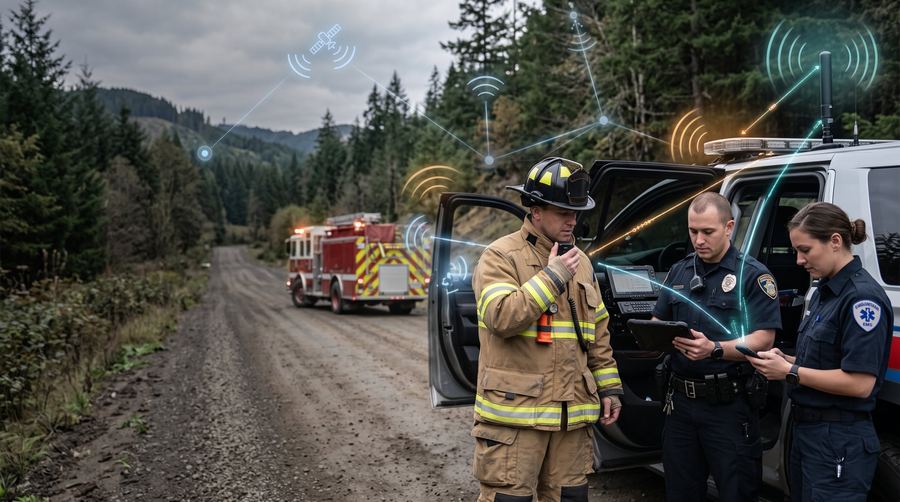
Land mobile radio remains the backbone for many agencies, and nothing here is meant to replace it. Mobile broadband adds what radio does not: data in the vehicle, photos and maps in the field, video, and group voice that follows people beyond a tower's reach. The two work best together, with each doing the job it suits.
Priority matters as much as speed. During large incidents public networks fill up, so agencies look for plans and services that keep responders connected when the crowd is heavy. We explain which options offer priority features and what they do and do not guarantee.
Common setups we build
A typical agency starts with vehicle routers in patrol cars, engines or ambulances, so laptops and tablets stay online, as covered in our fleet connectivity service. Many add push-to-talk that bridges teams who carry different radios, and portable networks for command posts at wildfires, search operations and large events. Smaller departments and volunteer groups often begin with phones and hotspots configured for the incident commander and a few key roles.
How deployment works
We begin with a conversation about your current radios, vehicles and the incidents that strain you most. We then propose a limited first step, such as outfitting a few vehicles or one command kit, and test it on real calls and exercises before scaling. Installation is scheduled to keep units available. Ascend Global Partners supports agencies of many sizes, and coverage along your response routes is checked before you buy.
What it costs to start
Public agencies often buy through budgets, grants and approved contract vehicles. We can provide itemized written quotes that fit your procurement process, with equipment, installation and monthly service listed separately. Total cost depends on the number of vehicles, the devices and the plans chosen. We do not name prices in advance because they vary too much with the setup.
Exercises before incidents
Equipment that has never been used under pressure is a risk. Build a short exercise into the rollout: set up a command kit in a parking lot, run a mock incident with a neighboring agency, and note what slowed people down. Check that logins work for everyone who might need them, that spare devices are charged, and that someone knows who to call when a device fails. Repeat the exercise each year and after any major change, so the first time you rely on the system is not a real emergency.
Frequently asked questions
Does this replace our radio system?
No. Mobile broadband adds data and extended-range voice alongside your radios. Many agencies use both.
What happens when the network is crowded?
Some plans offer priority features for responders. We explain what each includes and any limits, so you can plan around them.
Can you help with grant paperwork?
We can supply itemized quotes and equipment details for your application. The application and its compliance remain with your agency.
Can volunteer or small departments afford this?
Often yes, with a modest starting setup. A few devices configured well can make a real difference, and we scale from there.